XINYU
ZHANG
"LAYNE"
Game Design | Systems Design



The Still Diana
Level Designer | Narrative Designer | Scripter
Master's Thesis: "Best Practices: Enhancing Narrative Communication Through Environmental Shifts"
Overview
*This is full playthrough
Tool
Fallout 4:Creation Kit
Platform
PC
Development Time
~ 600 Hrs
Team Size
Individual
ABOUT
" The Still Diana" is a level designed in the game Fallout 4. Players embody a detective with superior profiling skills and, upon accepting a quest from an NPC at the Red Rocket, delve into investigating the cause of people missing near a school by examining case files and then teleporting themselves to the crime scene, a school, through profiling. The level focuses on the impact and enhancement of environmental shifts, including static and dynamic shifts, on environmental storytelling. Players will constantly switch scenes, traveling between the past and present, and experience the development of the story by collecting storytelling pieces through profiling (mainly in the past) and encountering enemies (in the present), while solving simple puzzles as the story progresses. In the end, the truth behind the mystery is uncovered by integrating all the collected narrative pieces.
The level features dynamic levels (environments that actively change structure as the narrative unfolds and the player shifts between past and present), and tests environmental observation and interpretation skills, as well as puzzle-solving abilities.
Gallery


Design Goal


Design Techniques
Multi-Layered Narrative Design

The present version of the lab

The past version of the lab
Overarching Narrative Following the advent of Synth technology, the businessperson Dr. Wills aimed to create the “perfect” Synths, leading to the establishment of the Wills Synth Research Institute. Despite his best efforts, he was unable to create a Synth that could fully mimic human behavior. He then turned to human memory as the source of sentience for his creations. To further the research, Wills built a school above the Institute to house potential subjects—orphans from the surrounding area, unaware they were part of an experiment. Believing they were simply students, these children lived under constant observation. However, as the experiment progressed, more and more students were secretly replaced with Synths carrying their transferred memories. However, due to flaws in the technology, the transferred students occasionally exhibited glitches and weird behavior. Diana, a young orphan raised in the school, had her (memories) transferred into a Synth body without her knowledge. Upon unexpectedly regaining some of her erased memories, she led a revolt that destroyed the Institute and ended the “perfect Synth” project, leaving the facility abandoned and eerily silent.
1. Storyline and Quest Flow
The player takes on the role of a detective investigating a series of disappearances near a school. Using case files and advanced criminal profiling, the player reconstructs and explores a “Present” version of the world. By uncovering narrative fragments tied to past events, the player can then profile and enter the “Past” version as well.
Throughout the game, players shift between present and past timelines to solve puzzles, uncover clues, and gradually piece together the full story behind the case. The main narrative & quest flow is:
-
Present (dilapidated world) -- combat and puzzles
-
Accept quest - investigate the case & profile
-
Fight enemies
-
Find notes to conduct profiling (enter "Past")
-
Collect all pieces and report to the quest giver
-
-
Past (new & clean world) -- staged stories and puzzles
-
Stage 1 -- Meeting new student (Diana meets the new comer Evelyn)
-
Stage 2 -- Becoming good friends (Diana builds friendship with Evelyn)
-
Stage 3 -- Glitches happen (Evelyn is secretly transferred to a Synth, and glitches start to happen)
-
Stage 4 -- Desctruction (Diana unexpectedly recovers her erased memories and leads the transferred Synths to destroy the facility)
-
Stage 5 -- Salvation (After destroying the facility and freeing the other victims (Synths implanted with students' memories), Diana’s consciousness gradually fades. Like others, she becomes a hollow shell, wandering the ruins.)
-

2. Time-Space Shifts and Shifting Perspectives
Players collect narrative fragments to profile new characters, shifting both perspective and timeline. Each profiling sequence lets players experience past events through another character’s eyes, deepening immersion and narrative complexity.
The story begins in the Present, where the detective reads a case file and profiles into the crime scene.
By gathering fragments tied to specific characters, players unlock Past scenes and relive their memories in first-person.
After each sequence or key discovery, players return to the Present to continue exploration or combat.
This structure delivers a layered narrative through multi-perspective, multi-timeline storytelling. The mystery—"What happened here?"—is revealed gradually, with the contrast between the clean past and ruined present heightening both intrigue and emotional impact. The system echoes criminal profiling: reconstructing events through fragmented viewpoints.

Change of the enemy appearances as narrative advances


Bears representing characters
3a. Symbols - Symbolic Storytelling Without Direct Characters
To support a more complex narrative, the level avoids direct character appearances. Instead, it relies on environmental storytelling, symbolic props, and enemy behavior to convey the story.
-
Bears serve as stand-ins for different characters, with their placement and decoration reflecting personality and emotion.
-
Enemies (Synths) reflect narrative progression. Early on, broken Synths wander the Present, embodying confusion. Later, more humanoid Synths appear—signaling greater narrative clarity and emotional weight.
This indirect approach deepens immersion and invites interpretation, encouraging players to uncover character arcs through symbolism and exploration.
3b. Symbolism – Indirect Storytelling Through Visual Metaphors
The level uses symbolism to reflect narrative progression and emotional shifts, encouraging players to interpret deeper meaning through space, visuals, and interaction.

Example 1
In the “Pass Notes” puzzle, players need to collect secret notes exchanged between Diana and Evelyn. As the puzzle progresses, their desks physically move closer—symbolizing a growing bond between them. By the end, they are the only two students left in the room, as if nothing else remains but the connection between them—a quiet culmination of their deepening friendship.

Example 2
In the “Answer Questions” puzzle, players experience Diana being called to answer a question in class, only to abruptly cut to a post-lesson scene—suggesting the onset of glitches in her memory. The question itself also subtly hints at the researchers’ manipulation of her mind.


Example 3
In the final stage, players repeatedly try to approach classmates but are blocked by rising walls. Eventually, they are trapped in a dark, enclosed space surrounded by walls—representing the gradual fading of Diana’s memories of her friends, culminating in complete loss.
Example 4
In the last scene, Diana returns to a seemingly happy moment—attending class with friends—but the environment slowly transforms into a laboratory. This shift symbolizes her final illusion breaking down as she transitions from memory to reality, marking the end of her consciousness.
Dynamic Level Layout
The level makes extensive use of Environmental Shifts to create a Dynamic Level that enhances narrative communication. Environmental shifts include both Static Environmental Shifts and Dynamic Environmental Shifts.
Static Environmental Shifts (SES)
Instantaneous or short-lived, one-time static changes, transitioning from one static scene/state to another. The focus of SES is more on the contrast before and after the change, rather than the process of change itself.
Dynamic Environmental Shifts (DES)
Highly visible environmental changes that occur over a period of time. DES primarily emphasize the process of change to attract player attention, highlight specific elements, or convey narrative significance.

Example 1
In this chapter, the player takes on Diana’s perspective, sneaking out of the dormitory with Evelyn during curfew to explore the school, eventually reaching the faculty office—where they uncover the school’s secret. This sequence uses Static Environmental Shifts to suddenly alter the environment, surrounding the player with school staff members. The abrupt shift mirrors the character’s fear and shock in that moment, enhancing narrative communication through emotional resonance.

Example 2
At the beginning of the profiling process, the player must first reconstruct the layout of the entire area based on the case file, before profiling the specific events that took place within it. When profiling the structure, players interpret each segment of the file to build out local areas, gradually deducing the function of each room and expanding outward until the full layout is formed.
This section makes use of Dynamic Environmental Shifts to draw the player’s attention and engagement, in line with the narrative context. The purpose of this chapter is also to help players build a mental map of the space through dynamic level changes, preventing disorientation during later time and space transitions.
Guiding Through Environment

Present–Past Switching Pattern
Timing
To prevent players from feeling overwhelmed by Environmental Shifts, careful pacing is essential. I designed major shifts to be driven by puzzles and story progression—players collect clues, teleport to another timeline, solve puzzles or engage in combat, then return and repeat. This structure gives each shift a clear purpose and allows time for exploration.

Position
To further support conveyance, all dynamic environmental shifts are visually centered on screen, making them easily noticeable and guiding the player’s attention. For example, after completing the bathroom puzzle, the player sees a toy car appear in the center of the hallway. It begins to move, subtly guiding the player toward the next story beat—the birthday celebration.
Anchor
To reduce disorientation from environmental shifts, I introduced two types of anchors:
-
Time Portals – Since time travel isn't player-controlled, clear signals were essential. A note served as the portal, while a nearby pocket watch acted as an anchor to prepare players.
-
Connecting Objects – Certain elements remained consistent to ease transitions and support logic. This included unchanged items within altered scenes or stable environments with changing contents.
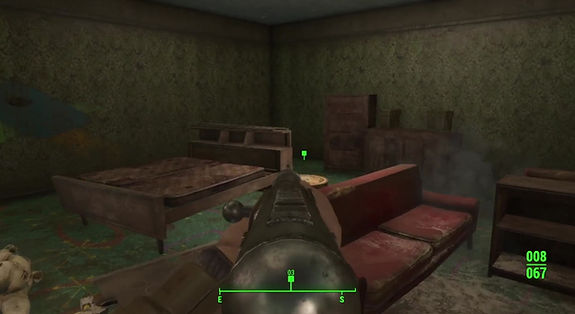
For instance, in the dormitory shift from Present to Past, the furniture changes, but the wallpaper, structure, and lighting stay the same—anchoring players in a familiar space across time.
Staged Scene
Aligned with the narrative curve and pacing, staged scenes are placed at key climactic moments. Carefully composed with props, characters, environment, lighting, and background, they create a deliberate, theatrical setup. These scenes heighten dramatic impact, enhance storytelling, evoke emotion, and most importantly, communicate the narrative to the player.
In this level, staged scenes are used in two distinct ways:
-
Player within the staged scene – The player is placed directly inside the scene, experiencing the story beat from the protagonist’s perspective. This approach emphasizes emotional immersion and personal connection.
-
Player observing the staged scene – The player views the scene from an external, third-person perspective. This setup conveys broader narrative context beyond the immediate moment, offering a more reflective and analytical understanding of the story.

Example 1
In the cafeteria scene, after the new student’s introduction, teddy bears (symbols of other students) suddenly surround the player. This places the player within the staged scene, implying her rising popularity and the others’ curiosity. By centering the player, it lets them experience the moment and the emotional tension between the two main characters.

Example 2
In this scene, the player observes several Diana Synths inside observation rooms. By positioning the player in front of multiple staged scenes, this moment offers a third-person perspective, allowing them to piece together background context—that this is a lab where student Synths are kept and experimented on.


Postmortem